Sclavia was born from a dream of returning to the land. In 2003, Mr. Granito decided to leave the city behind and invest in a remote, unspoiled countryside where nature still sets the rhythm of daily life. The road leading to the estate is winding and secluded, but this sense of isolation is precisely what preserves the authenticity and tranquility of the place.
From the very beginning, Sclavia focused on rediscovering and valorizing native grape varieties of Campania that had long been forgotten. Pallagrello Bianco, Pallagrello Nero, and Casavecchia were once considered almost lost grapes, officially reintroduced into the Italian National Catalogue only in the early 2000s thanks to dedicated research and recovery efforts. These “strangers,” as they were once called, today represent the soul of the estate.
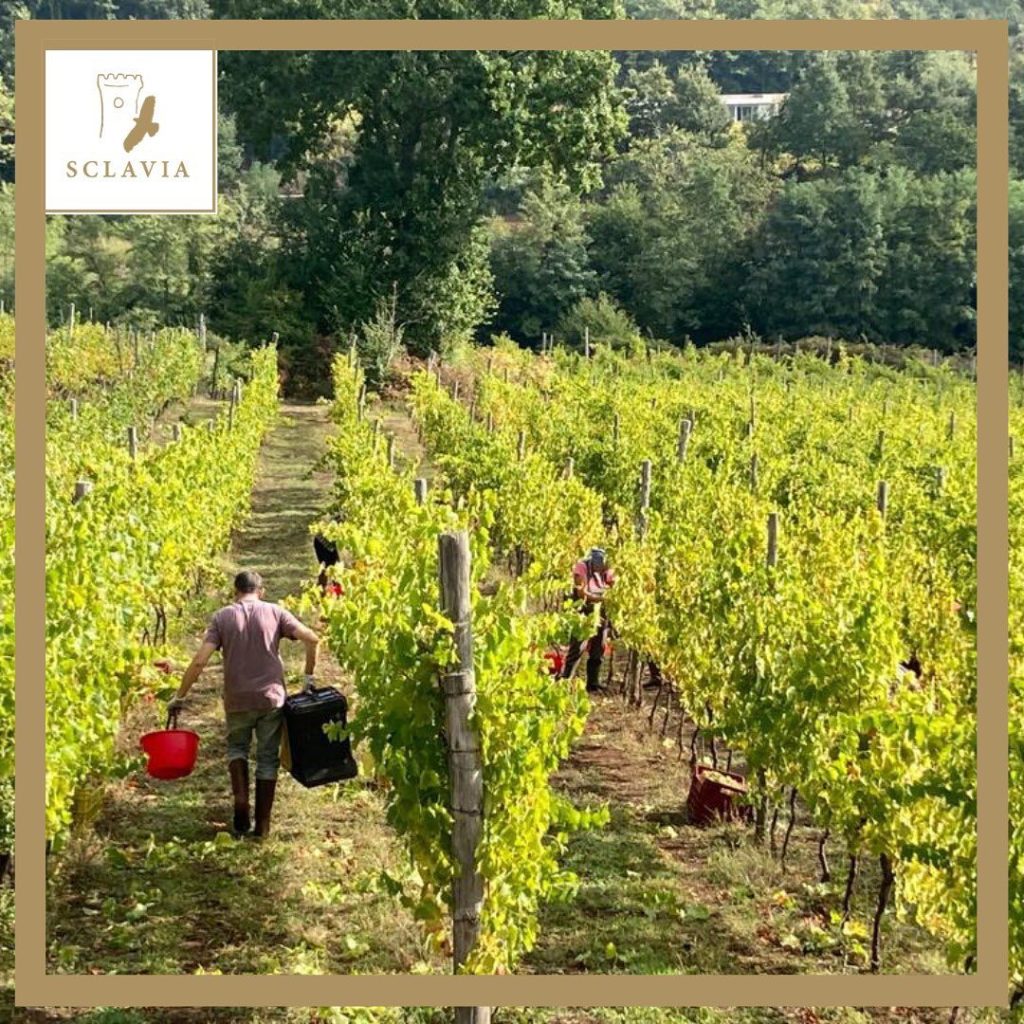
The vineyards are located at around 500 meters above sea level, on soils rich in limestone and clay, a combination that gives the wines structure, freshness, and a distinctive mineral character. The landscape is quiet and rural, and the winery itself reflects this philosophy: modern and functional, yet essential, allowing the vineyards and the wines to remain the true protagonists.
Over time, Mr. Granito was joined by Lello Ferrara, Pasquale and Fortuna Morman, and today the project involves a new generation with Lucia Ferrara, Andrea Cardillo, and Carmen Granito. The estate now covers approximately 14 hectares and is guided by agronomist Mr. Pappalardo and oenologist Anna Gate, ensuring precision both in the vineyard and in the cellar.
Sclavia today stands as a reference point for authentic Campanian wines, where native grapes, high-altitude vineyards, and respectful viticulture come together to express a territory that is still wild, sincere, and deeply rooted in history.