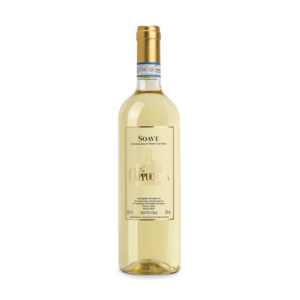
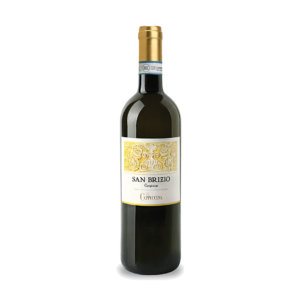
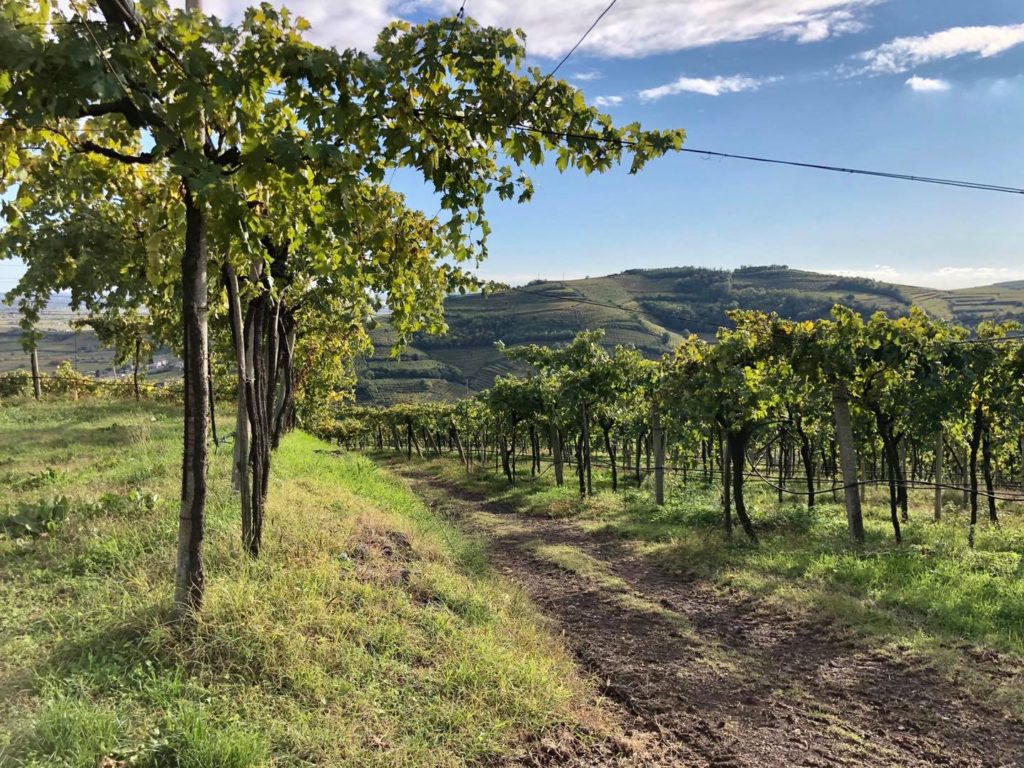
Since 1890, the Tessari family has been producing wine at the La Cappuccina estate in Costalunga di Monteforte d’Alpone, in the heart of the Soave DOC area east of Verona. For more than a century, this family-run estate has been deeply rooted in a territory historically devoted to viticulture, where tradition and a strong sense of place continue to guide every decision.
The estate takes its name from a beautifully restored 17th-century chapel adjoining Villa Buri-Tessari, once a place of worship for Capuchin friars. This historic building remains the most distinctive architectural feature of the property, and its silhouette has become the emblem of La Cappuccina, symbolizing the winery’s connection to history, culture, and landscape.
Today, the estate is led by the fourth generation of the Tessari family. Sisto, an agronomist with a degree from the University of Padua, oversees vineyard management and international markets; Pietro, a trained oenologist from the Conegliano School of Winemaking, is responsible for cellar operations; and Elena, with a degree in Economics and Business, manages marketing and public relations. Their combined expertise builds upon the legacy passed down by their father Lorenzo and grandfather Attilio, ensuring continuity and vision.
Since 1985, La Cappuccina has chosen to follow organic principles throughout every stage of wine production, from the vineyard to bottling. This long-standing commitment has positioned the estate among the pioneers of organic viticulture in Italy and has earned it recognition as one of the country’s leading organic wine producers.
In the vineyards, agronomic practices are designed to enhance biodiversity and maintain natural balance. Grass cover between the rows, the traditional practice of green manure through the sowing of legumes and flowering plants, and organic fertilization all contribute to healthier soils. Only natural substances such as copper and sulfur are used to protect the vines, encouraging the presence of pollinating insects like bees and beneficial species such as ladybirds.
These sustainable practices result in grapes that are naturally richer in polyphenols, proteins, and mineral salts, providing the foundation for wines of purity, vitality, and expressive character.
Environmental responsibility continues in the cellar, where sulfur dioxide is used only in minimal quantities to prevent oxidation. State-of-the-art filtration systems operate without additives or inert substances, while wastewater is treated through eco-compatible phytodepuration techniques. Bottling follows the lunar calendar, and finished wines are stored in a naturally conditioned underground cellar.
Sustainability also extends to packaging choices. Estate brochures are printed exclusively on recycled paper, lighter bottles are used to reduce CO₂ emissions by at least 20 percent, and a fully integrated recycling system ensures responsible use of glass, plastic, and paper. At La Cappuccina, respect for the environment is not a concept, but a way of life reflected in every bottle.